As a seasoned provider of Secondary Injection Relay Test Sets, I’ve encountered numerous inquiries from electrical engineers, technicians, and power system professionals about the input impedance of these devices. Understanding the input impedance is crucial for accurate testing and reliable operation of protective relays. In this blog post, I’ll delve into the concept of input impedance, its significance in secondary injection relay testing, and how it influences the performance of our test sets. Secondary Injection Relay Test Set

What is Input Impedance?
Input impedance, denoted as Zin, is a fundamental electrical parameter that characterizes the opposition a circuit presents to the flow of alternating current (AC) at its input terminals. It is a complex quantity, comprising both resistance (R) and reactance (X), and is typically expressed in ohms (Ω). The input impedance of a device determines how it interacts with the source supplying the test signals, influencing factors such as signal attenuation, distortion, and loading.
In the context of a Secondary Injection Relay Test Set, the input impedance plays a pivotal role in ensuring that the test signals are accurately delivered to the relay under test. A high input impedance minimizes the amount of current drawn from the test signal source, reducing the risk of signal attenuation and distortion. This is particularly important when testing relays with low-power or sensitive coils, as any deviation from the intended test signals can lead to inaccurate test results and potentially compromise the reliability of the protection system.
Importance of Input Impedance in Secondary Injection Relay Testing
-
Accurate Signal Reproduction: A high input impedance ensures that the test set accurately reproduces the input signals without significant distortion. This is essential for conducting tests that require precise measurement of relay parameters, such as pickup time, dropout time, and operating characteristics. By minimizing the loading effect on the test signal source, the input impedance helps maintain the integrity of the test signals, ensuring reliable and reproducible test results.
-
Compatibility with Various Signal Sources: Secondary injection relay testing often involves the use of different types of signal sources, including function generators, power amplifiers, and voltage/current sources. A test set with a high input impedance can be easily interfaced with these signal sources without significantly affecting their performance. This allows for greater flexibility in test setup and enables the use of a wider range of test equipment, enhancing the overall efficiency and effectiveness of the testing process.
-
Protection of Test Equipment: A high input impedance helps protect the test equipment from damage due to excessive current flow. By drawing minimal current from the signal source, the test set reduces the risk of overheating and component failure, extending the lifespan of the equipment and reducing maintenance costs. Additionally, a high input impedance helps prevent the test set from interfering with the operation of the signal source, ensuring the safety and reliability of the entire testing system.
Factors Affecting the Input Impedance of a Secondary Injection Relay Test Set
-
Internal Circuit Design: The internal circuit design of the test set has a significant impact on its input impedance. Components such as resistors, capacitors, and inductors are carefully selected and arranged to achieve the desired input impedance characteristics. For example, a test set with a high input impedance may incorporate high-value resistors and low-capacitance components to minimize the loading effect on the test signal source.
-
Frequency Response: The input impedance of a test set can vary with frequency. At low frequencies, the input impedance is primarily determined by the resistance of the input circuit, while at high frequencies, the reactance of the inductors and capacitors becomes more significant. A well-designed test set should have a flat frequency response over the range of frequencies used in relay testing to ensure accurate signal reproduction at all frequencies.
-
Load Conditions: The input impedance of a test set can also be affected by the load connected to its output terminals. When the test set is connected to a relay or other load, the load impedance can interact with the input impedance of the test set, causing changes in the overall impedance characteristics. It is important to consider the load conditions when selecting a test set and to ensure that the test set’s input impedance is compatible with the load impedance to achieve accurate test results.
Measuring the Input Impedance of a Secondary Injection Relay Test Set
Measuring the input impedance of a Secondary Injection Relay Test Set requires specialized test equipment and techniques. One common method is to use a network analyzer, which can measure the complex impedance of the test set over a range of frequencies. Another method is to use a simple voltage divider circuit, where a known impedance is connected in series with the test set’s input terminals, and the voltage across the test set is measured. By comparing the measured voltage with the known impedance, the input impedance of the test set can be calculated.
It is important to note that the input impedance of a test set can vary depending on the test conditions, such as the temperature, humidity, and frequency of the test signals. Therefore, it is recommended to measure the input impedance under the same conditions as the actual relay testing to ensure accurate and reliable results.
Our Secondary Injection Relay Test Sets and Input Impedance
At our company, we understand the importance of input impedance in secondary injection relay testing. That’s why our Secondary Injection Relay Test Sets are designed with high input impedance to ensure accurate signal reproduction and reliable test results. Our test sets feature advanced circuit design and high-quality components to minimize the loading effect on the test signal source, providing precise and consistent test signals across a wide range of frequencies.
In addition to high input impedance, our test sets offer a range of other features and benefits, including:
-
Versatility: Our test sets are capable of testing a wide variety of protection relays, including overcurrent, overvoltage, undercurrent, undervoltage, directional, and distance relays. This makes them suitable for use in a variety of applications, from industrial power systems to commercial buildings and utility substations.
-
User-Friendly Interface: Our test sets feature a user-friendly interface that makes it easy to set up and perform tests. The intuitive touchscreen display and simple menu navigation allow technicians to quickly and easily configure the test parameters and view the test results.
-
Portability: Our test sets are lightweight and portable, making them easy to transport to different locations. This allows technicians to perform on-site testing without the need for bulky and expensive test equipment.
-
Reliability: Our test sets are built to last, with rugged construction and high-quality components. They are designed to withstand the harsh environments and demanding conditions of industrial and utility applications, ensuring reliable performance and long service life.
Conclusion
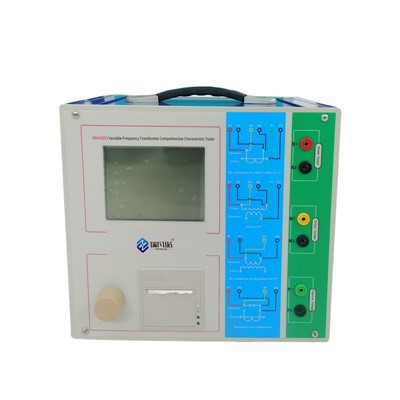
In conclusion, the input impedance of a Secondary Injection Relay Test Set is a critical parameter that influences the accuracy and reliability of relay testing. A high input impedance ensures accurate signal reproduction, compatibility with various signal sources, and protection of the test equipment. By understanding the concept of input impedance and its significance in secondary injection relay testing, you can make informed decisions when selecting a test set and ensure the effectiveness of your relay testing program.
CT PT Analyzer If you’re in the market for a high-quality Secondary Injection Relay Test Set, I encourage you to contact us to learn more about our products and services. Our team of experienced engineers and technicians is available to provide you with expert advice and support, and we’re committed to helping you find the right test set for your needs. Whether you’re a small electrical contractor or a large utility company, we have the expertise and resources to meet your testing requirements. Contact us today to start a discussion about your procurement needs and take the first step towards reliable and accurate relay testing.
References
- Electric Power Systems: A Conceptual Introduction by Ali Keyhani
- Protective Relay Testing Handbook by David J. Kelsh
- Relay Testing: A Practical Guide by Geoff Jessop
Refine On (Hebei) Electric Power Technology Co., Ltd.
Address: Building 13, Liandong U Valley, No.64, Jing SAN South Street, Economic Development Zone, Mancheng District, Baoding City, China
E-mail: victor@transformer-test.com
WebSite: https://www.transformer-test.com/
