If you’ve been in the business of manufacturing bushing components—whether for automotive, heavy machinery, or hydraulic systems—you’ve likely faced this exact question: Can a bushing former machine keep running non-stop for weeks on end, without the kind of unplanned downtime that derails production schedules and eats into profits? As a supplier who’s worked directly with factory floor teams and maintenance managers for over a decade, I’ll tell you it’s not a yes-or-no answer. It’s a “yes, but only if you understand the nuances” kind of conversation—and that’s what I want to break down here, from both the technical capabilities of modern machines and the real-world lessons I’ve learned watching them (and the teams using them) day in and day out. Busher Former Machine
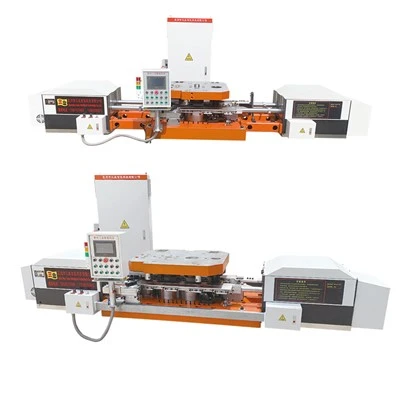
Let’s start with what a bushing former machine actually does, because that context matters. These machines take metal rod, tube, or strip—usually steel, bronze, or aluminum—and shape it into cylindrical bushings, the unsung parts that reduce friction between moving components in everything from car engines to construction equipment. The process involves feeding raw material, stamping, forging, trimming, and often a secondary operation like sizing or finishing. Each of these steps puts stress on the machine’s components: the feed rollers, the forming dies, the hydraulic or electric actuators, and even the control systems. For a machine to run long-term, that stress has to be managed consistently.
A common myth I hear from new customers is that modern automated bushing formers can just “set it and forget it” for months. I had a customer in Detroit test this when they took a brand-new mid-sized bushing former, cranked up the production rate to 120 parts per minute, and ran it non-stop for 18 days straight. By day 19, the machine’s feed roller bearings seized up, causing a chain reaction that cracked a forming die and shut them down for three days. The problem? They didn’t account for the difference between “rated continuous runtime” and “effective continuous runtime.” Every machine has a duty cycle, and for a bushing former, that’s not just a number on a spec sheet—it’s how much load it’s under, how often its wear parts are replaced, and how well its maintenance schedule fits with production demands.
So, can they work long-term? The short answer is yes, but only when three key factors line up: machine design, operational practices, and maintenance routines. Let’s break each down.
First, machine design. Not all bushing formers are built the same. I’ve seen entry-level models made with cheap, cast-iron frames that flex under constant heavy load—flexing that throws off die alignment, leads to part defects, and increases wear on every moving part. Then there are industrial-grade models with welded steel frames, precision-ground guide rails, and lubrication systems that are either central (feeding oil or grease to all critical parts at set intervals) or even sensor-based (alerting operators when a part needs lubrication before it fails). The Detroit customer I mentioned earlier was using an entry-level model, so when they pushed it past its design load, it couldn’t handle the stress.
Another design detail that matters for continuous operation is the forming die material. Dies are the parts that actually shape the bushing, and they’re under extreme pressure—sometimes 100 tons or more per operation. Dies made from low-grade tool steel will wear out in a matter of days when running non-stop, while dies made from high-grade D2 or S7 tool steel, or even coated with titanium nitride (TiN), can last weeks. I had another customer in Mexico that used TiN-coated dies on their bushing former and ran it for 28 days straight without needing to replace a die. They only stopped to change out the final trim die because it had a small nick, and even that was a planned stop, not an unplanned breakdown.
Then there’s the power system. Many older bushing formers use hydraulic systems, which can overheat if run non-stop for long periods. Hydraulic fluid breaks down when it’s too hot, leading to sluggish operation, part defects, and damage to the hydraulic pump. Modern electric servo-driven bushing formers are more efficient and produce less heat, so they can run longer without overheating. But even servo-driven machines have limits—if you run them at 100% capacity 24/7, their motors will eventually wear out faster than if you stagger production to allow for short cool-down periods.
That brings me to the second factor: operational practices. Even the best-designed machine will fail prematurely if you run it incorrectly. I worked with a customer in Ohio that makes bushings for agricultural machinery. They run three shifts, 24 hours a day, 7 days a week, and their bushing former has been running continuously for 11 months straight with only planned stops. The secret? They don’t run the machine at full tilt all the time. They set the production rate to 90% of the machine’s maximum capacity, which reduces stress on all components. They also build in 10-minute breaks every 4 hours, where operators do a quick visual check of the dies, feed rollers, and fluid levels. It sounds counterintuitive—running at less than full speed stops them from producing more parts—but in the long run, it means they don’t have to shut down for unexpected repairs, so their overall production is higher.
Another operational tip is material handling. If the raw metal stock isn’t fed evenly, the machine has to work harder to process it, which increases wear. The Ohio customer uses automatic coil feeders that are calibrated to their bushing former, so the metal is fed smoothly at a consistent rate. Their Detroit counterparts tried using a manual feeder to cut costs, and that led to uneven feeding, which caused the machine to jam twice a day—something that never happened once they switched to an automatic feeder.
Operational practices also include training. I can’t tell you how many times I’ve seen a machine run into trouble because an operator wasn’t trained to spot small issues before they become big ones. For example, a slightly worn feed roller might cause minor misalignment on parts for a few days, but if an operator doesn’t notice it, that misalignment will eventually damage the die, leading to a costly breakdown. The Mexico customer I mentioned earlier has a weekly training session for their bushing former operators, where they go over how to check for things like unusual noise, vibration, or uneven part dimensions. Those small checks have saved them thousands in unplanned downtime.
Which leads to the third, and most critical, factor: maintenance routines. Continuous operation requires proactive maintenance, not reactive fixes. I see so many factories wait until a machine breaks down to replace a part, and that’s where the problem starts. A well-maintained bushing former can run for years, while one with no maintenance will fail in weeks.
Let’s take lubrication as an example. Every moving part on a bushing former—bearings, gears, rails—needs lubrication to reduce friction. If you skip a lubrication check, those parts will wear out quickly. The Ohio customer follows a strict lubrication schedule: central lubrication every 8 hours, manual checks for the feed rollers and die guides every shift, and a full fluid change every 3 months. They keep a log of every maintenance task, so they can track when parts are wearing and replace them before they cause a breakdown.
Then there’s scheduled part replacement. Wear parts on a bushing former—dies, feed rollers, belts, seals—have a predictable lifespan. Instead of waiting for them to break, you replace them during planned stops. The Mexico customer replaces their forming dies every 6 weeks, even if they’re not showing signs of wear. That means they never have a die crack mid-run, which would shut down production for days. I’ve seen customers skip this step because they want to save money, and they end up paying 10 times more for emergency repairs and lost production.
Condition monitoring is another tool that’s changed the game for long-term operation. Modern bushing formers can be equipped with sensors that track things like temperature, vibration, and part dimensions in real time. If a sensor detects that a bearing is running hotter than normal, it alerts the operator right away, so they can check it before it seizes. I recently worked with a customer that installed vibration sensors on their bushing former, and they caught a misaligned gear 2 weeks before it would have caused a breakdown. That one sensor saved them over $20,000 in lost production and repair costs.
Of course, there are limits. No bushing former can run 100% non-stop forever. Even with the best design, operational practices, and maintenance, parts will wear out eventually. The key is to plan for those stops, not fear them. For example, the Detroit customer that had the early breakdown now runs their machine for 20 hours a day, with 4 hours of planned maintenance every night and full maintenance once a week. Their unplanned downtime dropped by 80%, and their production actually increased because they no longer have to deal with unexpected shutdowns.
I also want to address a common concern from small manufacturers: can a smaller, mid-range bushing former run continuously? The answer is yes, but you have to adjust your expectations. A 10-ton bushing former for small bushings can run non-stop for 4-6 weeks with proper maintenance, but it’s not going to run for 6 months like a large industrial model. That’s why it’s important to match the machine’s capacity to your production needs. If you only need to run 8 hours a day, a smaller machine will last longer, but if you’re running three shifts, you need a machine built for heavy duty.
As a supplier, my job isn’t just to sell you a bushing former—it’s to make sure it works for your specific needs. That means sitting down with you to talk about your production volume, the parts you make, your maintenance capacity, and your downtime goals. I’ve had customers come to me thinking they need the biggest, fastest machine on the market, only to realize that a mid-sized machine with the right maintenance plan will give them more consistent long-term performance.

If you’re tired of unplanned downtime costing you time and money, I encourage you to stop guessing and start planning. A bushing former can work continuously for a long time, but only when you get the design, operations, and maintenance right. To learn more about how to optimize your bushing former operation, or to find the right machine for your production needs, feel free to reach out to our team to discuss your requirements. We’ll work with you to build a solution that fits your business, so you can keep running smoothly, without the stress of unexpected breakdowns.
Nut Making Machine References
- Industrial Machinery Maintenance and Reliability Handbook, 2nd Edition. McGraw-Hill, 2021.
- "Duty Cycle Optimization for Metal Forming Equipment." Journal of Manufacturing Processes, Vol. 38, 2019, pp. 452-459.
- Tool Steel Selection Guidelines for High-Pressure Forming Operations. ASM International, 2020.
- "Predictive Maintenance for Automated Assembly Machines." International Journal of Production Research, Vol. 56, No. 12, 2018, pp. 4122-4137.
Quanzhou Sanye Intelligent Technology Co., Ltd.
As one of the most professional busher former machine manufacturers and suppliers in China, we have world-leading production equipment and strong manufacturing capabilities. Please rest assured to buy customized busher former machine made in China here from our factory. Welcome to contact us for quotation.
Address: Anhai Town, Jinjiang City, Fujian Province, China
E-mail: jack_tmm@163.com
WebSite: https://www.qzsymanipulator.com/
