If you’re like most folks running a business that relies on refrigeration – whether that’s a grocery store, a food processing plant, a cold storage warehouse, or even a small corner café with a walk-in cooler – you know that your refrigeration unit isn’t just a box that keeps stuff cold. It’s the backbone of your operations. But let’s be real: unless you just installed it last week, your unit’s probably not running as efficiently, reliably, or affordably as it could be. And that’s where upgrades come in. As a refrigeration unit supplier, I get asked all the time: “What’s actually worth upgrading, and what’s just a waste of money?” Today, I’m breaking down the most common, high-ROI upgrades we recommend to our customers, no fancy jargon, no sales fluff – just real, actionable stuff that’ll save you cash, cut down on headaches, and keep your perishables fresh. Refrigeration Unit
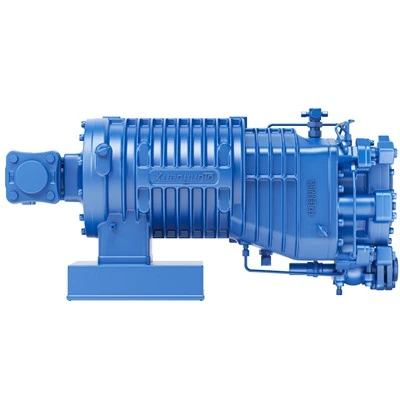
First off, let’s talk about the biggest drain on any refrigeration unit’s wallet: energy costs. For most businesses, refrigeration uses 20-50% of their total electricity – that’s not a small number. If your unit’s 10+ years old, it’s almost certainly running on outdated tech that guzzles power. The single most popular upgrade we push these days is a high-efficiency compressor. Old compressors are either fixed-speed (they run at 100% all the time, even when they don’t need to) or early variable-speed models that still suck at modulating cooling to match actual load. New scroll or digital reciprocating compressors? They’re built with advanced tech that adjusts their output based on how much cooling your space needs – so they don’t waste energy cooling an empty walk-in when you only need to chill a few pallets. I had a customer last year, a small frozen food distributor, swap out their 12-year-old fixed-speed compressor for a high-efficiency variable one. Their electricity bill dropped by 28% in the first three months. That’s not chump change – that’s enough to cover the upgrade in less than 18 months. Win.
Next up, evaporator and condenser coil replacements (or deep upgrades, not just cleaning). A lot of people think “cleaning coils” is enough, but over time, coils corrode, build up hard-to-remove gunk, or get bent from accidental bumps, and even the best monthly cleanings can’t fix that. Condenser coils, specifically, release heat from your unit to the outside air. If they’re clogged with dust, lint, or food residue, they can’t release heat properly – so your unit has to work way harder to keep your space cold. A customer who runs a chain of convenience stores told me their old condenser coils were so dirty, their units were running 24/7 even in mild weather. Swapping them for new, enhanced-coils (usually coated with a corrosion-resistant material that repels gunk) cut their run time by 15% across all 5 stores. Evaporator coils, meanwhile, are the ones that cool the air inside your space. If they’re damaged or inefficient, they can cause uneven cooling, which means some of your inventory is getting too warm and spoiling faster. Upgrading to better, more evenly spaced evaporator coils eliminates hot spots and keeps every last item at the right temp. Trust me, I’ve seen produce go bad because of a lopsided evaporator – that’s a way bigger loss than the cost of new coils.
Then there’s the upgrade to electronic expansion valves (EEVs), which most old units still don’t have. Wait, what’s an expansion valve? Basically, it’s the part that controls how much refrigerant flows into the evaporator coil. Old units use thermostatic expansion valves (TXVs), which are pretty basic and not super precise. TXVs adjust flow based on superheat (a fancy way of saying how much heat the refrigerant has left after cooling), but they’re often inaccurate, especially at part load (when your unit isn’t working at full capacity). EEVs, on the other hand, are electronic, so they can adjust flow in tiny, real-time increments. That means less refrigerant waste, more consistent cooling, and again, lower energy use. A cold storage client of mine has a 10,000 sq ft facility that stores everything from fresh berries to frozen meat. Before they added EEVs, their refrigerant charge was off by almost 10% – that meant they were overcharging (wasting refrigerant, which is not cheap) and underperforming. After the upgrade, their refrigerant usage dropped by 12% and their cooling consistency improved so much they only had to test inventory temperatures once a week instead of three times. That’s less labor, less waste, less stress.
Speaking of refrigerant, let’s not ignore that whole thing. If your unit is pre-2010, it’s almost certainly running on R-22 refrigerant – which is being phased out globally because it’s a potent greenhouse gas. Parts for R-22 units are getting harder and more expensive to find every year, too. So one of the most common “necessary” upgrades these days is converting your old unit to a lower-GWP (global warming potential) refrigerant, or if your unit is really old (15+ years), swapping the whole refrigerant circuit. Wait, I know what some of you are thinking: “That sounds complicated and expensive.” It can be, but think of it this way: if your R-22 unit breaks down next winter, you might have to wait weeks for a part, and a single pound of R-22 costs over $80 these days. Newer refrigerants like R-452B or R-513A are cheaper, more efficient, and way better for the planet, which can even help with some local environmental incentives. We recently did a retrofit for a wine bar that had a 20-year-old wine cellar unit running on R-22. Converting it to R-513A cost them about $1,200, but they saved $400 a year on refrigerant and their unit now uses 10% less energy. That’s a no-brainer for small commercial spaces.
Another upgrade that flies under the radar is adding a variable frequency drive (VFD) to your condenser fan motors. Wait, the fan motors that blow air over the condenser coils? Old units use fan motors that run at constant speed, no matter what. So if it’s 80 degrees outside, the fan is blowing as hard as it is when it’s 100 degrees. That’s wasted energy. A VFD lets the fan speed adjust based on the outdoor temperature. On mild days, the fan runs slow; on hot days, it cranks up. It’s a super simple, low-cost upgrade (usually a few hundred bucks) that can cut fan energy use by 30-40%. I installed VFDs on a small grocery store’s back-of-house condenser unit last year, and their monthly energy bill went down by about $180 just from that one tweak. It’s not a huge upgrade, but it’s easy to skip if you don’t know it exists.
Oh, and let’s talk about monitoring and control systems. Smart refrigeration controls are one of the most game-changing upgrades we’ve seen in the last 5 years. Old units have basic thermostats that just turn the unit on and off when temp hits a set point. New smart controls let you monitor every part of your unit in real time – temperature, run time, energy use, even refrigerant pressure – from your phone or computer. You get alerts if something’s wrong before it becomes a breakdown: like if a coil is starting to freeze, or if a fan motor is about to burn out. I had a customer last year who got an alert at 2 a.m. that their walk-in cooler was 2 degrees too warm. They went in, found a dirty coil, cleaned it, and avoided a $5,000 loss in spoiled deli meat. If they’d waited until morning, that meat would have been garbage. Smart controls also let you adjust temperatures remotely – like if you’re at a trade show and realize you left your store’s cooler set too low, you can crank it up a little to save energy, or if you have a delivery coming, you can turn it on early. We even offer smart control packages that work with all major unit brands, so you don’t have to replace your whole unit to get that tech.
Wait, but before you run out and buy every upgrade under the sun, let’s talk about what you should prioritize, because not every upgrade is right for every unit. If your unit is over 20 years old, it’s probably more cost-effective to replace the whole unit than to pile on multiple upgrades. But if your unit is 5-15 years old, these upgrades will almost always give you a better return than a full replacement, at least for the next 7-10 years. I always tell customers to start with the biggest energy drain first: usually compressor, coils, and VFDs. Those give the fastest payback. Then, if you’re dealing with old refrigerant or efficiency issues, move to EEVs or refrigerant conversion. If you want peace of mind, add smart controls last.
Another thing I can’t stress enough: work with a reputable supplier and technician. I’ve seen customers get scammed into buying upgrades they don’t need – like a $5,000 “energy upgrade” that was just cleaning their coils. As a supplier, we do free assessments for our customers: we come out, run diagnostics on your unit, tell you exactly what’s wrong, what upgrades will help, and what’s just a waste. We don’t pressure you to buy everything at once – we tailor it to your budget and your needs. Last month, a small café came to us with a $1,000 monthly energy bill for their two coolers. We did an assessment, found their condenser coils were clogged, their fan motors were running inefficiently, and their thermostat was outdated. We recommended upgrading the coils and adding a VFD for one unit, which cost them $1,800 total. Their bill the next month was $720. That’s a $1,080 savings – and they’ll recoup the upgrade cost in less than two months. That’s the stuff that matters.
I know a lot of business owners are hesitant to spend money on upgrades, especially when cash flow is tight. But here’s the thing: a breakdown in the middle of summer, when your refrigeration unit is working its hardest, can cost you way more than any upgrade. Spoiled inventory, emergency service fees (which are through the roof in peak season), lost customer trust – that’s way worse than a monthly upgrade payment. And with energy prices only going up, those upgrades will keep saving you money for years to come.

If you’re ready to stop wasting money on your refrigeration unit, or if you just want to figure out what upgrades make sense for your specific setup, don’t overcomplicate it. Reach out and talk to us – we’ll walk through your unit, your needs, and your budget, no sales pitch, no hidden fees. We’ve worked with every kind of business, from corner cafes to large warehouse facilities, and we know exactly what works. At the end of the day, your refrigeration unit is what keeps your business running – so it makes sense to make it run as well as possible.
Screw Compressor Unit REFERENCES
- Air-Conditioning, Heating, and Refrigeration Institute (AHRI). (2022). Commercial Refrigeration Efficiency Upgrades: A Guide for Facility Managers. AHRI Standard 550/590.
- U.S. Department of Energy (DOE). (2023). Energy Efficiency Improvements for Commercial Refrigeration Systems. DOE Office of Energy Efficiency & Renewable Energy.
- International Institute of Refrigeration (IIR). (2021). Low-GWP Refrigerant Retrofits for Small Commercial Units. IIR Technical Bulletin 2021-004.
- Food and Agriculture Organization (FAO). (2022). Reducing Post-Harvest Losses in Cold Storage Through Equipment Upgrades. FAO Cold Chain Management Series.
- National Environmental Health Association (NEHA). (2023). Smart Monitoring Systems for Commercial Refrigeration: Preventing Spoilage and Reducing Waste. NEHA Journal of Environmental Health.
Zhejiang Xuanyuntong Refrigeration Technology Co., Ltd.
Zhejiang Xuanyuntong Refrigeration Technology Co., Ltd. is one of the most experienced refrigeration unit manufacturers and suppliers in China. We warmly welcome you to wholesale high quality refrigeration unit made in China here from our factory. Also, custom service is available.
Address: South Side, No. 9 Zhongyuan, Pukou Sub-district, Shengzhou City, Shaoxing City, Zhejiang Province, China
E-mail: admin@xytrefrigeration.com
WebSite: https://www.xytrefrigeration.com/
