Hey everyone, let’s cut to the chase if you’re in the industrial machinery, agriculture, or construction game—you know hydraulic motors are the unsung heroes that turn fluid power into the torque that moves everything from your front-end loader’s bucket to a conveyor belt at a factory. And if you’ve ever dug into how these motors actually work beyond “it uses oil,” you’ve probably heard the term cam ring thrown around. As a hydraulic motor supplier, I get tons of questions about this part: why does it matter? Is it just a fancy bracket? Spoiler—nope, it’s the heart of a whole type of hydraulic motor, and skip it, and your motor’s just a hunk of metal that goes nowhere. Let’s break this down like we would over a quick shop floor chat, no stuffy engineering jargon that makes your eyes glaze over. Hydraulic Motor
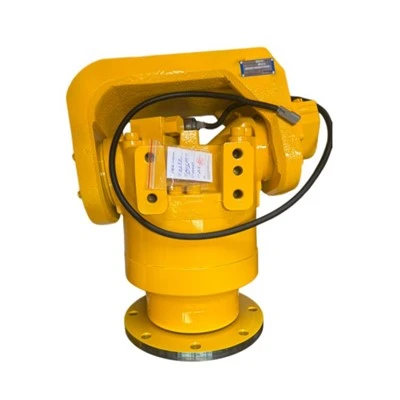
First, let’s set the scene. The most common hydraulic motor I deal with is a gerotor or, wait, no—wait, the cam ring is the star of a radial piston hydraulic motor, right? Yeah, that’s the workhorse for high-torque, low-speed applications that can’t afford to stall under pressure. Most folks I talk to mix up radial piston motors with other types, so let’s keep it simple: inside every radial piston hydraulic motor, you’ve got three main moving parts (plus seals, but let’s ignore those for a sec): a driveshaft, a set of pistons that slide in and out of cylinders, and… the cam ring. That’s where the magic happens.
Wait, let’s not skip the basics of how hydraulic motors work at their core. Hydraulics run on Pascal’s principle: pressure applied to fluid gets transferred evenly, so small pushes turn into big pushes. In a motor, pressurized hydraulic fluid comes into the motor, and that pressure has to push something to spin the driveshaft. For radial piston motors, those pistons are the “something”—they’re arranged in a circle around the driveshaft, right? If there was no cam ring, those pistons would just sit there, pushed out by pressure, and maybe wiggle a little, but no rotation. The cam ring is the curved, oval (or sometimes irregularly shaped ring) that the end of each piston presses against as the motor runs. That curvature is the key.
Here’s how it works step by step, no fancy equations: Pressurized fluid enters the motor’s cylinder block, forcing individual pistons out of their cylinders. Each piston’s roller end presses tight against the inner surface of the cam ring. As the driveshaft spins the cylinder block, each piston moves along the cam ring’s contour. Wait—if the cam ring is a perfect circle, the piston would move in and out at the same rate, no torque change, no rotation. But if it’s an eccentric oval? Or a shape with lobes? That’s when the magic hits. When a piston moves from the narrowest part of the cam ring to the widest part, it extends, which creates a force perpendicular to the cam ring’s surface. That force pushes back, and since the cylinder block is connected to the driveshaft, that push spins the whole thing. For every piston, this cycle repeats—every time a piston passes a high-point on the cam ring, it pushes harder, turning that hydraulic pressure into rotational torque.
Now, why is that different from other motor designs? Let’s take axial piston motors, which you might know too. Axial ones have pistons lined up parallel to the driveshaft, and they use a swashplate instead of a cam ring. But radial piston motors (the ones with cam rings) are better for heavy lifting—like cranes, augers, or marine winches, where you need that low-speed, high-torque output without a gearbox. The cam ring is the reason that torque is smooth, too. If the cam ring’s profile is precision-machined, the force from each piston is evenly distributed, so no jolting, no wasted energy. I’ve seen cheap knockoff motors where the cam ring is machined lopsided—they run, but they leak, they burn through fluid faster, and they fail way sooner. That’s why as a supplier, I can’t stress enough: the cam ring isn’t a replacement part you can grab from a random hardware store; it’s custom for your motor’s torque needs.
Wait, let’s talk about function beyond just making torque. There’s two big, underrated jobs the cam ring does that I bet most folks don’t think about. First, it acts as the internal brake (in a way) for the motor. When the pressurized fluid is cut off, the pistons press against the cam ring, creating residual friction that stops the motor from free-spinning. That’s a big deal for applications where you don’t want a heavy load drifting—like a excavator’s bucket holding a ton of dirt; you don’t want it to slump because the motor’s spinning on its own. A lot of new customers forget that feature until they’ve had a load slip, and then they’re scrambling to upgrade to a motor with a properly designed cam ring.
Second, the cam ring sets the motor’s displacement. Displacement is just how much fluid the motor needs to spin one full revolution—bigger cam ring, bigger displacement, more torque. That’s why we build different cam rings for different applications. A farm tractor’s hydraulic motor for the front loader needs a medium displacement cam ring to lift 2,000 pounds at 10 RPM; a marine winch pulling a 10,000-pound anchor needs a larger, thicker cam ring (with a more exaggerated oval shape) to get that 500 lb-ft of torque at 5 RPM. Mess up the cam ring’s dimensions, and your motor’s either too weak (can’t lift the load) or too inefficient (wastes fluid and energy) to run right.
Now, let’s address a common myth I hear all the time: “Can’t I just machine my own cam ring to save money?” Look, I get it—cost is tight, especially with supply chain chaos the last few years. But here’s the thing: cam rings for high-performance hydraulic motors have to be made from a specific material—usually ductile iron, or hardened steel for extreme loads. That material has to stand up to thousands of pounds of pressure from the pistons, plus constant friction. A home-machined part from regular steel or aluminum will warp, crack, or wear out in weeks, not years. And the profile? A cam ring’s contour has to be within a thousandth of an inch to work right. Even a tiny error means uneven piston movement, which causes pressure leaks, vibration, and premature wear on the whole motor. I had a customer last year who tried to save $200 by reusing a cam ring from a old non-matching motor—his new motor seized up in 3 days, cost him $1,200 in downtime plus replacement parts. That’s a lesson no one wants to learn the hard way.
Another question I get: do all hydraulic motors have a cam ring? Nope. Gerotor motors (used in small power tools, like hydraulic drills) have a inner ring and rotor, not a cam ring. Bent-axis motors use a different design. But if you’re dealing with a radial piston motor—9 out of 10 industrial, agricultural, and construction motors I supply—there’s a cam ring at its core. It’s not the flashiest part, but it’s the reason those motors can do the heavy lifting they’re built for.
Let’s also chat about wear and tear on cam rings, because that’s a big part of keeping your motor running. Over time, as pistons roll against the cam ring, the inner surface wears down a little. If that wear gets uneven, you’ll notice your motor’s output drops, or it makes a knocking sound, or it leaks hydraulic fluid around the pistons. That’s usually a sign the cam ring needs resurfacing or replacement, not the whole motor. As a supplier, we offer cam ring replacements for most of the motors we sell—way cheaper than a full motor rebuild, and it gets your equipment back up and running fast. I always tell customers to check their cam rings during regular maintenance (every 500 hours of operation, roughly) instead of waiting for it to fail. It saves way more money than fixing a breakdown on a job site.
Wait, let’s make this personal. Last quarter, a construction company I work with had a problem: their front-end loader’s hydraulic motor started stalling when they tried to lift a full load of gravel. They thought it was the fluid filter or a pressure regulator, but after pulling the motor apart, we saw the cam ring’s outer lobe was worn down 0.003 inches—enough to make the piston force inconsistent. We swapped the cam ring, and their loader was back to work that same afternoon, no downtime. That’s the kind of thing that makes me glad I can explain how the cam ring works—because when that part fails, it’s not just a part; it’s a delay, a cost, a headache for your whole operation.

Now, why does all this matter for you? If you’re out there buying hydraulic motors for your business, don’t just look at horsepower or price. Ask about the cam ring: what material is it made of? Is it precision-machined for your specific torque and speed needs? A cheap motor with a generic cam ring might work for a month, but it’ll cost you way more in repairs and downtime long-term. A quality motor with a properly designed, hardened cam ring will last 10,000 hours or more, which pays for itself fast.
Hydraulic Motor Gear Reducer At the end of the day, the cam ring is a perfect example of how hydraulic parts work—no flash, no fancy branding, just a well-designed metal part that turns pressure into action. It’s the unsung part that makes all the big stuff move. If you’re currently looking for a hydraulic motor replacement, or you’re dealing with a motor that’s acting up, don’t waste time guessing. We can walk you through what cam ring design you need for your application, help you pick the right motor, or even supply a replacement cam ring if that’s all you need. Don’t let a tiny, crucial part derail your next project—reach out to us to chat through your needs, no pressure, no sales pitch.
References
- Hydraulic Power Association. (2021). Radial Piston Motor Design and Performance Standards. Hydraulic Power Association Press.
- Mann, D. (2019). Hydraulic Components: Function, Selection, and Maintenance. Industrial Press.
- National Fluid Power Association. (2020). Guidelines for Cam Ring Manufacturing in Hydraulic Motors. NFPA Technical Bulletin 12-20.
Ningbo Oushijie Hydraulic Transmission Co., Ltd.
Ningbo Oushijie Hydraulic Transmission Co., Ltd. is one of the most professional hydraulic motor manufacturers and suppliers in China, also supports customized service. With abundant experience, we warmly welcome you to wholesale durable hydraulic motor at competitive price from our factory.
Address: Changshi Sanxing Industrial Zone, Jiulong Lake Town, Zhenhai District, Ningbo,Zhejiang, China
E-mail: yong@nbosj.com
WebSite: https://www.nbosj.com/
