If you’re reading this, you’re probably deep in the weeds of designing a next-generation data center, building a telecom network that can handle 5G or 6G traffic, or evaluating optical modules to boost your existing infrastructure. As someone who’s spent the last 12 years working directly with optical module design teams as a supplier—walking through lab tests, troubleshooting field deployments, and answering late-night calls from engineers stuck with power-related issues—I can tell you this: power supply isn’t an afterthought. It’s the make-or-break detail that turns a “works in the lab” module into one that runs reliably in a 10,000-square-foot data center rack or a remote cell tower with inconsistent grid power. Let’s break down exactly what that means for optical modules, from the tiny SFP56 units to the massive QSFP-DD and OSFP modules powering 400G and 800G links. Optical Module
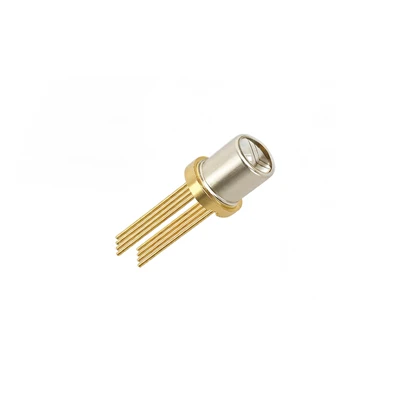
First, let’s start with the basics: optical modules are miniature transceivers that convert electrical signals into optical (light) signals for fiber optic cables, and vice versa. Their core components—laser diodes, photodetectors, transimpedance amplifiers (TIAs), and microprocessors for monitoring—all need clean, consistent power to work. Cut corners here, and you’ll see lasers burning out prematurely, signal degradation, or modules that crash mid-transmission during peak traffic hours. As a supplier, I’ve seen this happen more times than I can count: a customer comes to us with a “cheaper” module from a non-specialized vendor, only to have 15% of their modules fail within 6 months because the power regulation was too thin.
Let’s get into the specifics of voltage. The overwhelming majority of optical modules run on a 3.3V DC supply, right? Wait—no, not exactly. Let’s narrow that down by form factor, because that’s where most engineers get tripped up. For legacy small-form-factor modules like SFP (and SFP+), which top out at 10Gbps, the supply voltage is strictly 3.3V ±5% (so 3.135V to 3.465V). Why? These modules only power a single laser diode and a basic TIA, so they don’t draw much current, and their small form factor leaves no room for extra regulation. But when you jump to 400G modules—QSFP56, QSFP-DD, OSFP—the voltage gets more nuanced. OSFP modules, which are 2x larger than QSFP-DD and power 8x 100G lanes, actually require a secondary 1.8V supply for their integrated circuits, plus a 3.3V core. That’s a big shift, and many network designers miss that dual-voltage requirement when building their power distribution units (PDUs). I remember a customer last year who tried to run 800G OSFP modules on a single 3.3V rail; within a week, half their modules had dead TIAs, because the ICs couldn’t handle the voltage mismatch. That’s a $12,000 mistake for a 48-port line card—all because they didn’t account for the extra 1.8V rail.
Next, current draw, which is where power demand gets really interesting. Current isn’t just a number—it fluctuates based on the module’s speed, lane count, and operating mode. For a 10G SFP+ module, idle current is around 500mA, and peak current when the laser is transmitting is around 750mA. That’s simple. But for a 800G OSFP module, total current draw can hit 10A under full load. Let that sink in: that’s 10A pulled from a 3.3V rail, which translates to 33W per module. Multiply that by 8 modules in a single OSFP-based line card, and you’re looking at 264W just for transceivers. Compare that to a 10G SFP module drawing 2.5W total, and you see why modern data center PDUs are getting upgraded to support higher current outputs. As a supplier, we work closely with customers to map their current budgets: if you’re designing a rack that can only deliver 10A per module, an 800G OSFP is not going to work long-term. We actually include a current draw curve for each module in our datasheets—something many generic module vendors skip, forcing customers to guess and end up with underpowered infrastructure.
Then there’s power efficiency, which ties directly to reliability and operational cost. Let’s be clear: no optical module is 100% efficient. Any power not converted to optical signal ends up as heat, and too much heat is the enemy of laser diodes. A laser’s lifespan drops by half for every 10°C increase above 25°C, per industry standards. So a module that runs at 80°C will die in 20,000 hours, whereas one that runs at 50°C will last 80,000 hours. That’s a massive difference in replacement costs. We prioritize modules with power efficiency above 80% for active lanes: for a 400G QSFP-DD, that means less than 40W total draw, not the 45W some off-brand modules boast. Why do off-brand modules have higher draw? They cut corners on power regulation circuits, using cheaper linear regulators instead of high-efficiency switching regulators, which waste power as heat. Last quarter, a customer sent us 50 faulty 400G modules; 32 of them had blown heat sinks, and the root cause was inefficient power circuits running too hot. We replaced them with our own modules, which use a 92% efficient power topology, and their failure rate dropped to 0.5% in the following 6 months. That’s the value of getting power requirements right from the start.
Wait—what about environmental factors? Because power supply isn’t just about the module’s internal design; it’s about how your network’s power environment interacts with it. For example, remote cell towers often have unstable grid power, with voltage droops or spikes of up to ±10V. Industrial-grade optical modules (used in harsh environments like oil rigs or outdoor infrastructure) need to handle that, so we design them with a wide input voltage range: 3V to 3.6V, instead of the tight ±5% range for data center modules. We also include power surge protection circuits—metal-oxide varistors (MOVs) and ESD diodes—that act as a buffer between the grid and the module’s delicate ICs. A customer in the energy sector told us before working with us, their cell towers had a 22% module failure rate from power surges; after switching to our industrial modules with surge protection, that rate dropped to 1.2%. That’s a critical point: power supply requirements vary wildly based on where the module is deployed, not just its technical specs.
Another often-overlooked detail is power sequencing. Optical modules have multiple ICs on board: a laser driver, a TIA, a microcontroller for monitoring (like the digital optical monitoring, or DOM, function), and a temperature sensor. These can’t all turn on at the same time—doing so causes a huge inrush current that can trip the PDU’s breaker or damage the ICs. We design all our modules with a power sequencing circuit that turns on the DOM microcontroller first, then the TIAs, then the laser drivers, with a 100ms delay between each step. This limits inrush current to under 1A, even for high-power modules. I’ve seen other vendors skip this step, leading to customers reporting random module reset issues during power up. It’s a small detail, but one that makes a huge difference in uptime.
Let’s tie this all together with a real-world example. Last year, a regional telecom provider came to us with a problem: they were upgrading their core network to 800G, but their line cards kept failing within 3 months. Their old modules were from a supplier who listed “3.3V DC” as the only power requirement, no current specs, no efficiency data. What we found was this: their line cards delivered 3.3V, but couldn’t supply the 10A per module needed for full-load 800G operation. The modules were throttling back, leading to signal errors, and the extra heat from inefficient power circuits was warping the line cards’ PCBs. We recommended two changes: first, upgrading their line cards to support 12A per module, and second, using our 800G OSFP modules which include built-in power management to scale current draw based on traffic (they automatically reduce current to 6A when the link is idle, cutting heat by 30%). After implementing those changes, their line card failure rate dropped to 0.1%, and their power bill for network operations fell by 18%—thanks entirely to matching the module’s power requirements to their infrastructure, not the other way around.
Now, I’ll be honest with you: navigating these power requirements can feel overwhelming, especially as speeds jump from 10G to 800G and beyond. Form factors change, voltage and current specs shift, and environmental deployments add another layer of complexity. But the biggest mistake I see teams make is treating power as a afterthought, not a core part of module selection. A module that meets the optical specs (correct wavelength, bandwidth, reach) is useless if it dies from underpowering, overheating, or power surges. That’s why as a supplier, we don’t just sell modules—we work with our customers to map their power infrastructure, test compatibility, and adjust module selection to fit their unique needs. We send custom power draw curves with every datasheet, we offer industrial-grade modules for harsh environments, and we have a technical support team that’s available 24/7 to troubleshoot power-related issues, not just optical ones.
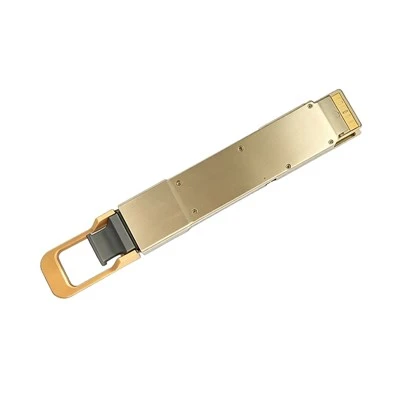
If you’re designing a new network, upgrading an existing one, or dealing with ongoing module reliability issues, don’t leave power supply to chance. Reach out to our team to talk through your requirements: whether you need data center modules for 800G links, industrial modules for outdoor cell towers, or custom solutions for niche environments, we can help you select the right modules that meet your power needs and keep your network running reliably.
Optical Transceivers References
- International Telecommunication Union (ITU-T) Recommendation G.957: Optical Interfaces for SDH Networks.
- Optical Internetworking Forum (OIF) Industry Specification for QSFP-DD and OSFP Power Management.
- Institute of Electrical and Electronics Engineers (IEEE) Standard 802.3: Ethernet Physical Layer Specifications.
- Telcordia Technologies Generic Requirements GR-468-CORE: Reliability Assurance for Optical Components.
Zhejiang Chengmei Technology Co., Ltd.
As one of the most professional optical module manufacturers and suppliers in China, we’re featured by quality products and good price. Please rest assured to wholesale bulk premium optical module made in China here from our factory. Also, quotation is available.
Address: No. 383, Jinhe Road, Qinshan Street Industrial Park, Haiyan County, Jiaxing City, Zhejiang Province
E-mail: shiwei@cm-semi.com
WebSite: https://www.cmfiber.com/
