If you’re in the fabrication game—whether you’re cutting fabric for apparel, foam for cushions, or even thin cardboard for packaging—chances are you’ve wondered if cutting multiple layers at once is even possible. I get it; I’ve had clients call me all the time asking the same thing: “Can your servo cutting machine handle stacking 10, 20, even 50 layers and cut them all perfectly in one go?” For years, a lot of old-school cutting machines could barely tackle two or three layers without jamming, misaligning, or leaving ragged edges. But here’s the good news: modern servo cutting machines? They absolutely can—and when set up right, they’re way more reliable than you might think. Servo Cutting Machine
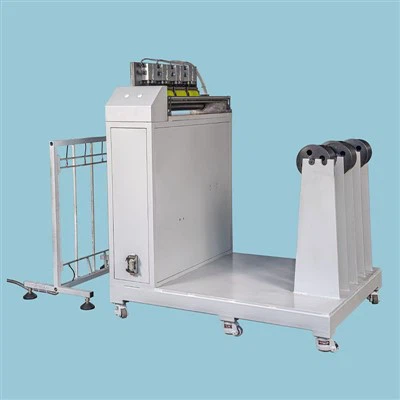
Let me break this down like I explain it to a new client who just bought their first machine and is testing it out. First, let’s get the basics straight: what makes a servo cutting machine different from, say, a manual or pneumatic one? The servo motor is the star here. Unlike pneumatic setups that rely on air pressure to drive the blade, a servo motor uses precise electric control to adjust blade speed, pressure, and movement in real time. That precision is non-negotiable when you’re cutting multiple layers because the biggest issues with multi-layer cutting usually come down to inconsistent pressure or slow, jerky movement.
Wait, let’s talk about those common pain points first, because that’s where people get tripped up. If you try to cut 30 layers of cotton fabric with a old pneumatic machine, for example, the bottom layers often get crushed by too much pressure, while the top layers get a clean cut. Or the blade might veer off course because the motor can’t adjust to the thickness of the stacked material. But a servo machine fixes that because it has closed-loop feedback—meaning the motor is constantly checking how much force the blade is applying, how fast it’s moving, and whether it’s on track. So if the stack is a little uneven, the servo will adjust the blade pressure mid-cut instead of just plowing through and ruining the whole set.
But here’s the catch: not all servo machines are built equal for multi-layer cutting. I’ve seen clients buy a cheap servo machine from a no-name supplier, and within a week, it’s jamming every time they go over 15 layers. Why? Because they cut corners on two key parts: the blade system and the table support. Let’s start with the blade. For multi-layer cuts, you don’t want a flimsy straight blade. You need a sharp, tempered oscillating blade. Oscillating means it vibrates up and down really fast—like, thousands of times per minute—so instead of just slicing through material, it chews through it a little, which makes cutting through multiple layers easier. A servo machine controls that oscillation speed too; thicker stacks need slower oscillation to prevent the blade from breaking, while thinner layers can go faster.
Then there’s the table. If your machine’s table is flimsy, when you clamp down the stack to hold it in place, the table will bow a little, leaving the middle layers uncut. A good servo cutting machine for multi-layer work has a rigid, aluminum honeycomb table or a vacuum table that holds the entire stack evenly, not just the edges. Vacuum tables are especially handy because you don’t have to deal with messy clamps that can leave indentations on the top layer of your material. I had a textile client last month who was using a clamp-style table and losing 10% of their fabric to indentations until they switched to a vacuum table paired with our servo machine. They cut 40 layers at once now, and their waste went down to less than 1%.
Now, let’s get into the science a little, but keep it casual. The maximum number of layers a servo machine can cut isn’t a random number—it depends on three things: the type of material, its thickness, and the blade’s power. For example, if you’re cutting thin polypropylene sheeting (like packaging material), you can get away with 50+ layers, no problem. But if you’re cutting thick neoprene (like for wetsuits), you might only get 15-20 layers before the blade starts to dull or the machine can’t apply enough pressure. Another thing: material compressibility. Soft materials like foam or fleece compress more when you stack them, so you can fit more layers than with rigid materials like acrylic or cardboard. I always tell clients to do a quick test: stack 5 layers of your material, run a test cut, then add 5 more, and keep going until you see edge fraying or jams. That way you find the sweet spot for your specific material, not some generic number online.
Wait, let’s address a myth that comes up all the time: “If I cut more layers, I’ll save more money, right?” Well, not exactly. There’s a point of diminishing returns. If you try to cut 100 layers when your machine is only rated for 40, you’re gonna end up with a whole stack of material that’s cut halfway through, plus a broken blade and a machine that needs repairs. I had a client a year ago who tried to cut 80 layers of cotton to save on labor, and ended up ruining $2,000 worth of fabric and paying $1,200 for a new blade and motor repair. Ouch. So the key is to find that sweet spot—most of our clients cut between 20-60 layers, depending on what they’re working with, and that’s where they see the best ROI without wasting material or money on maintenance.
Another big plus of servo machines for multi-layer cutting: accuracy. A lot of people worry that cutting multiple layers means the bottom layers won’t line up with the top ones. But because the servo motor is programmed with your design file, it repeats the exact movement thousands of times without deviation. So even if you’re cutting 50 layers, every single piece will be the same size and shape. That’s a huge upgrade from manual cutting, where even with a template, you might have a 1-2 mm difference between pieces. I work with a apparel brand that cuts 32 layers of denim for jeans pockets on our servo machine, and their defect rate for misaligned pieces dropped from 7% to 0.5% when they switched from their old cutter.
Now, let’s talk about some use cases to make this real. A lot of our clients are in the furniture industry, cutting foam cushions. They used to cut 2 layers at a time with a bandsaw, which took hours. Now they cut 25 layers of 2-inch foam with our servo machine, and that same job takes 20 minutes instead of 4 hours. Then there’s the packaging industry—they cut 30 layers of cardboard for shipping boxes, and since the servo machine can cut intricate shapes (not just straight lines), they don’t have to do extra trimming. Even the automotive industry uses these machines for cutting interior trim materials, like vinyl or fabric, and they cut 40 layers at once to keep up with high production runs.
But wait, what about thin, delicate materials? Like lace or tulle? Can a servo machine handle multiple layers there? Yeah, but you have to adjust the settings. You don’t want too much blade pressure, because that will crush the delicate fabric. Our servo machines let you set individual pressure and oscillation for specific parts of the design, so for the intricate lace edges, we lower the pressure a little and speed up the oscillation, and for the solid parts, we bump it up. That way you get a clean cut without ruining the delicate material. I had a client who makes wedding veils, and she used to cut 1 layer at a time, which took forever. Now she cuts 10 layers of tulle and lace, and she says her production time is down by 70%.
Now, let’s cover the downsides, because no machine is perfect. Servo cutting machines are a bigger upfront investment than pneumatic or manual ones, right? But when you factor in the material savings, labor time, and lower maintenance, they pay for themselves within 6-12 months for most clients. Another downside: if you’re cutting super thick or dense materials (like 1-inch leather), you might not be able to cut as many layers. But even then, a servo machine will outperform any other type of cutter. Also, you have to keep the blade sharp—dull blades cause more jams and ragged edges, so we recommend changing the blade every 10-20 hours of use, depending on the material. That’s way easier than replacing a whole machine, though.
Let me wrap this up with a quick truth check: a lot of people still think multi-layer cutting is only for big companies with giant industrial machines. But modern servo cutting machines are compact enough for small workshops, and they can cut multiple layers without sacrificing quality. The key is picking the right machine for your material, setting it up correctly, and not pushing it beyond its sweet spot.

If you’re thinking about upgrading your cutting process or trying multi-layer cutting for the first time, don’t guess—reach out, and we can walk you through what works for your specific needs. We can even send a test cut on your material so you can see how many layers you can get, no strings attached. No fine print, no sales pitch that’s too good to be true—just real advice from people who’ve been in the cutting game for years.
Fin Forming Machine References
- Technical Guide to Multi-Layer Cutting with Servo-Driven Industrial Cutters, Industrial Fabrication Association, 2022
- Evaluation of Blade Technology for High-Volume Multi-Layer Material Cutting, Journal of Manufacturing Processes, Vol. 45, 2021
- ROI Analysis of Servo Cutting Machines for Small to Medium Fabrication Shops, Small Business Manufacturing Report, 2023
Suichang Lvye Machinery Co., Ltd.
We are one of the most professional servo cutting machine manufacturers in China, also support customized service with low price. We warmly welcome you to buy discount servo cutting machine for sale here from our factory. If you have any enquiry about quotation, please feel free to email us.
Address: No. 402, Mudanting East Road, Miaogao Street, Suichang County, Lishui City, Zhejiang Province
E-mail: L528753@outlook.com
WebSite: https://www.suichanglvye.com/
