Hey there, let’s cut through the steel industry jargon real quick because if you’ve ever tried to source material for tanks that hold super hot or super dangerous stuff, you’ve probably heard the term “pressure vessel steel” thrown around. Maybe you’ve confused it with regular carbon steel, or even stainless steel? I get it—when I started in this game 12 years ago, I thought all steel was just… steel. Spoiler: I was very wrong. And as a pressure vessel steel supplier, I’ve had to explain this difference way more times than I can count, so let’s break it down like we’re chatting over a coffee (and yes, I’ve got a fresh pot going right now, so this is gonna be solid). Pressure Vessel Steel

First off, let’s talk about what a pressure vessel even does, because that’s the whole reason the steel is different. Pressure vessels are those tanks (or pipes, or even storage units) that hold gases or liquids at way higher (or way lower) pressure than atmospheric pressure we deal with every day. Think about the tanks at a refinery that hold pressurized hydrogen, or the ones that keep liquid natural gas cold enough to stay a gas at super low pressures, or even the tanks on a brewery that carbonate beer. If that steel fails? It’s not just a little leak—we’re talking explosions, toxic spills, huge safety risks, and legal headaches no one wants. Regular steel? It’s built for low-stress situations, like your car frame or a construction beam. Totally different ballgame.
So what makes pressure vessel steel (let’s just call it PVS from here on, no need to say pressure vessel steel every time) stand apart? Let’s start with the big one: controlled composition, not just “steel” which is basically iron + carbon. Regular carbon steel is like a one-size-fits-most hoodie—fine for basic stuff, but if you’re climbing a mountain, you need a technical jacket that’s tailored for the conditions. PVS is that technical jacket. We’re talking exact, tightly locked chemical mixes. Let’s get specific, but not boring: regular steel might have a random bit of sulfur or phosphorus because it’s not super critical, but PVS? Sulfur and phosphorus are kept way, way low. Why? Those two cause brittleness when the steel is under stress—exactly what you don’t want in a tank holding 100 psi of methane. Instead, PVS gets extra doses of stuff like manganese to boost strength, or chromium and molybdenum for high-temperature resistance, or nickel for cold weather (that’s why we call some of our cold-weather PVS “nickel-alloy steels” — it’s not a sales gimmick, it actually works). I once had a client who tried using regular steel for a LNG tank in Alaska—surprise, it cracked at -40°F. We fixed it with our nickel-added PVS, and now they come back every year. That’s the difference: we design the chemistry for a specific job, not just to be cheap.
Next up: manufacturing process. Regular steel is often made with basic oxygen furnaces, right? It’s fast, it’s cheap, it works for sidewalk grates. PVS? We use more precise methods—electric arc furnaces with extra steps, like vacuum degassing. What’s vacuum degassing, you ask? It’s basically pulling all the tiny bubbles and leftover gases (like nitrogen or hydrogen) out of the molten steel before it cools. Those bubbles are called “inclusions,” and in regular steel they’re annoying, but in PVS? They’re like little time bombs. When the tank is under pressure, those bubbles grow, weaken the steel, and can cause sudden failure. I’ve seen a report from a power plant that had a regular steel pipe crack because of hydrogen inclusions—cost them millions in downtime. Our PVS goes through that degassing step, so those bubbles are gone. Also, we heat-treat PVS way more carefully. Regular steel might get a quick temper, but PVS is often quenched and tempered—meaning we heat it to a super high temp, cool it fast, then reheat it to a lower temp to get that perfect balance of strength and flexibility. It’s like how you temper a knife—too hot and it’s brittle, too cold and it bends. We get that balance exactly right every time, no shortcuts.
Then there’s performance under stress, which is the whole point. Regular steel might have a good tensile strength (that’s how much pull it can take before breaking), but it’s not consistent under pressure cycles. Pressure vessels get “cycled” all the time—like, they fill up, release pressure, refill, repeat. That constant up and down causes “fatigue,” like bending a paper clip back and forth until it breaks. PVS is built to handle that fatigue way better. I remember a client in the chemical industry who was switching from a competitor’s steel to ours because their old tanks were failing after 2 years of cycling, and ours have been going strong for 5. Why? Our PVS has uniform grain structure—no weak spots where stress can crack through. Also, we can tailor it for extreme temps: if you’re storing something in a hot refinery (like molten salt, 1000°F), our high-alloy PVS doesn’t lose strength like regular steel would. If you’re working in a cold warehouse in Canada, our low-temperature PVS doesn’t turn brittle like regular carbon steel does at freezing temps. Regular steel just can’t do that—if you put it at -20°F, it gets glassy and breaks if you tap it hard. Not ideal for a tank holding pressurized propane.
Wait, let’s talk about the “other steels” people mix up with PVS, because that’s a huge point. First, stainless steel. A lot of folks think “stainless is strong, so it’s for pressure vessels.” Yeah, sometimes, but stainless is for corrosion first, pressure second. PVS is for pressure first, corrosion second. Like, if you need a tank that holds saltwater under pressure, maybe stainless works, but if you need a tank that holds hot hydrogen at 300 psi, our carbon-moly PVS is cheaper and actually better at handling that high temperature. Also, stainless is way more expensive—why waste money on extra chromium when you don’t need it for corrosion? Then there’s tool steel—tool steel is super hard, but it’s brittle as hell. You don’t want a pressure vessel that’s hard enough to hold a punch but cracks when you add pressure. That’s why tool steel is for drill bits, not tanks. And cast steel? Cast steel is cheap, but it has more impurities from the casting process, so it’s not good for high-pressure applications. I once had a client ask for cast steel for a high-pressure water tank—told him no, and he almost laughed until his first test tank leaked under pressure. Now he’s one of our repeat buyers.
Another big one: testing. We don’t just roll PVS and ship it out like regular steel. Every single batch goes through strict testing that regular steel never sees. We do hydrostatic testing—fill the steel with water, pump it way beyond its working pressure, and make sure it doesn’t burst. We do ultrasonic testing to check for hidden cracks or inclusions. We even do impact testing—drop a little weight on a sample at different temps to make sure it doesn’t shatter. Regular steel might get a basic tensile test, but that’s it. No hydro, no ultrasound. It’s the difference between a test that proves a material works and a quick check to make sure it’s not rusted. I have a folder of old test reports from the early days—clients who tried cutting corners on material testing, and their tanks failed. We test every batch, so we can back up every pound of steel we sell.
And before I wrap this up, let’s address the elephant in the room: cost. I know, I know, PVS is more expensive than regular steel. But here’s the thing: regular steel for pressure vessels costs you way more in the long run. Failures, downtime, lawsuits, replacement costs—we’ve seen clients save 30% total over 5 years by using PVS instead of cheap regular steel. It’s like buying a good pair of work boots vs. cheap ones: the cheap ones fall apart in 3 months, the good ones last 2 years. Same logic here.
At the end of the day, it all comes down to intent. PVS isn’t just “steel for pressure”—it’s steel engineered to be safe, reliable, and consistent in conditions where failure isn’t an option. As a pressure vessel steel supplier, I don’t just sell metal; I sell peace of mind. I’ve been in this long enough to know that cutting corners on material is never worth it. If you’re working on a project that needs a pressure vessel—whether it’s a new refinery tank, a brewery’s carbonation system, an LNG storage unit, whatever—don’t waste time guessing. Our team can hook you up with the right PVS, test reports included, and make sure you get exactly what you need, no hidden fees, no bad batches.
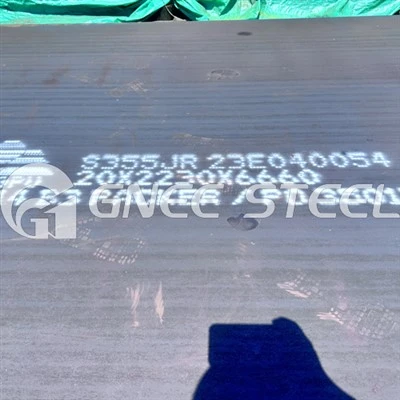
If you’ve got questions about what kind of steel works for your specific project, or you’re tired of dealing with suppliers that cut corners on quality, hit us up. We’re here to make sure your pressure vessels work right, the first time, every time.
Abrasion Resistant Steel References:
- ASME Boiler and Pressure Vessel Code, Section II: Material Specifications
- NACE International, Corrosion Control for Pressure Vessels
- Steel Manufacturers Association, Pressure Vessel Steel Grade Standards and Properties
- International Organization for Standardization (ISO) 9001, Quality Management Systems for Steel Manufacturing
Gnee Steel (Tianjin) Co., Ltd.
As one of the most professional pressure vessel steel manufacturers and suppliers in China, we also support customized service with low price. We warmly welcome you to buy high quality pressure vessel steel in stock here from our factory. If you have any enquiry about free sample, please feel free to email us.
Address: No.4-1114, Beichen Building, Beicang Town, Beichen District, Tianjin, China
E-mail: alloy@gneesteelgroup.com
WebSite: https://www.chinavesselplates.com/
