If you’ve ever wondered how labs, pharma companies, or even fancy microchip factories pull off having water so pure it’s basically free of every single impurity you can think of—like bacteria, heavy metals, or even tiny organic molecules that mess up sensitive experiments or products—let me tell you, it’s not magic. It’s ultra pure water systems (UPWS), and as someone who’s been supplying these for over a decade, I get asked all the same questions: “How do you keep that water consistent? No surprises, no random spikes in junk?” Today, I’m breaking down exactly how these systems lock in stable water quality, no fancy jargon, just real talk from someone who installs and troubleshoots these things for a living. Ultra Pure Water System

First off, let’s get one thing straight: stable water quality isn’t a one-and-done job. You can’t build a system that churns out perfect water once, then walk away and forget about it. The feed water coming into your facility is a wild card—city tap has chlorine, lead, maybe even traces of pesticides or Pharmaceuticals; well water can have hard minerals, iron, or weird bacteria that love to hide. So the whole UPWS is built like a layered defense, each step doing a specific job, and every part is tuned to never let its guard down, even when feed water changes that day. That’s the key to stability—no single point of failure, and layers that catch whatever the previous one misses.
Let’s start with the pre-treatment phase, because this is where most people skip steps and then wonder why their pure water goes sideways a month later. Pre-treatment is all about making that aggressive, dirty feed water gentle enough for the high-tech parts that actually make it ultra pure. The first stop is usually a sediment filter—think of it as a giant coffee filter, but for water. It catches all the big, obvious junk: sand, rust, dirt, even tiny bits of pipe that flake off when the city adjusts pressure. If you skip this, those big bits will jam up the more delicate parts of your system, like reverse osmosis (RO) membranes, which are thin as a human hair and impossible to unclog once gunked up. No one wants to replace $2,000 membranes every six months, right?
Next up, we often add activated carbon filters. These aren’t your basic fish tank carbon, either—they’re granular or block carbon designed to grab chlorine and chloramine. Wait, chlorine is bad for a reason, right? If chlorine gets past the pre-treatment and hits your RO membrane, it eats away at the plastic membrane material over time, turning it into Swiss cheese. That leads to leaks of feed water contamination straight into your pure water, which is a disaster. So the carbon step is non-negotiable, and we size these filters based on your feed water volume and chlorine levels—no one-size-fits-all here, which is why a system that works for a small lab might crash at a 24/7 pharma plant.
Then there’s water softening, if your feed water is hard (has lots of calcium and magnesium). Those minerals cause scale—like the gunk that builds up in your coffee maker—on RO membranes or distillation units, which blocks water flow and makes the whole system less effective over time. The softener swaps those hard minerals for sodium (or potassium, if that’s a concern) so they don’t build up, keeping the rest of the system running smoothly. The big thing here is that every pre-treatment step has a monitor built in—no guessing if the filter is still working. We install pressure gauges on each filter, so if the pressure drops or spikes, that’s a red flag that the filter is clogged or worn out. And we set up alerts—either on-site or via email—to text or call the facility manager when it’s time to change a filter, not a week after it’s already failed. That’s how you avoid random contamination spikes before they happen.
Once pre-treatment does its job, the main purification steps kick in, and this is where the ultra pure magic happens. The workhorse of almost every UPWS is reverse osmosis. RO works by pushing water through that super-thin membrane with tiny pores—so small, in fact, that they block 99% of dissolved solids, bacteria, viruses, and even most organic molecules. But RO alone isn’t enough for ultra pure water—we’re talking 18 megohm-cm resistivity here (that’s the gold standard for pure water, meaning almost no charged ions left) and less than 1 part per billion (ppb) of total organic carbon (TOC) for most pharma or lab applications. So after RO, we add either deionization (DI) or electrodeionization (EDI), which is the more modern, low-maintenance option. EDI uses electricity to pull out any remaining charged ions that RO missed—like sodium, lead, or nitrates—without the need for disposable DI resin that has to be swapped every few months. That’s a big win for stability, because DI resin runs out slowly, and if you don’t catch it, you end up with pure water that starts to slip in quality. EDI systems, on the other hand, are monitored 24/7 for their output, so if the resistivity starts to drop (meaning ions are getting through), the system automatically adjusts the electricity to pull more, or flags that it needs maintenance before it’s a problem.
Wait, but what about organic molecules? Those tiny, uncharged ones that RO and EDI might miss, like leftover cleaning agents or trace pesticides? That’s why almost every UPWS adds a polishing step, usually ultra-violet (UV) oxidation and sometimes a final ultrafiltration (UF) step. The UV part uses 185 nm wavelength light, which breaks down organic molecules into tiny bits that are easier to catch, and also kills any bacteria or viruses that might somehow sneak past all the filters. And UF? It’s like a super fine mesh that catches any remaining bacteria, even the ones that are too small to see or too tiny to be caught by regular filters. For example, in a cell culture lab or a semiconductor fab, even a single bacteria cell can ruin a batch. So that final polishing step is the last line of defense against any last-minute contaminants, and like every other part, it has sensors that check how much TOC is in the final water, or how much bacteria is present, so you know it’s doing its job.
Now, here’s the part most people don’t talk about that makes the difference between a good UPWS and one that stays stable for 10+ years: the monitoring and control system. This isn’t just a fancy screen that says “water is flowing”—it’s a whole network of sensors checking every parameter, every second. Resistivity (to make sure ions are low), TOC, pH, temperature, even bacterial count. If any of these drift even a little outside the set point (like if resistivity drops from 18.2 to 17.8 megohm-cm, which is still technically pure but might be a sign something’s off), the system doesn’t just keep running—it alerts someone, and often can adjust itself to fix it. For example, if the EDI unit’s voltage is a bit low, it will boost the voltage to get back to the right resistivity, instead of letting the water slip. And all this data is stored, so if a facility has a problem later, we can go back and check exactly when the water quality drifted, what feed water conditions were like that day, and fix the root cause instead of just swapping parts.
Also, maintenance is non-negotiable, but it’s proactive, not reactive. As a supplier, I don’t just drop off the system and leave. We set up regular service plans where we come in every 3, 6, or 12 months (depending on how heavily the system is used) to test all the components, change filters before they clog, calibrate sensors so they’re not giving bad readings, and check for any small issues before they become big ones. I’ve seen way too many facilities buy a cheap UPWS from a random online seller, skip service, and then have a $10,000 batch of pharma product ruined because a filter failed and contaminated the pure water. That’s the stuff no one tells you about when you’re just looking for the cheapest price.
Wait, let’s use a real example to make this concrete. Last year, I installed a system for a small biotech lab that was having constant issues with their pure water: their experiments kept failing, and the water resistivity would randomly drop in the middle of the day. Turns out, they had bought a no-name system online that only had RO, no EDI or final polishing, and pre-treatment filters that were way too small for their feed water. When city water pressure spiked that afternoon, the sediment filter clogged, so the RO membrane got a burst of chlorine that ate through a patch, letting ions through, and there was no UV or UF to catch any extra bacteria that snuck in. We swapped their system out for our layered setup: sized pre-treatment filters, EDI, UV polishing, full monitoring system, and a quarterly service plan. Six months later, they told me their experiment success rate went up 40%, and they haven’t had a single water quality issue. That’s the stability we’re talking about.
Another thing to consider: consistency means adapting to your specific needs, not a one-size-fits-all approach. A semiconductor fab that needs ultra pure water for wafers (where even a single particle can ruin a chip) has way stricter standards than a high school chemistry lab. So our systems are customized: for the fab, we add extra ultrafiltration and constant particle counting; for a pharma plant, we add validated TOC testing and data logging to meet FDA requirements. But the core philosophy is the same: layers of purification, constant monitoring, and proactive maintenance, so no matter what feed water throws at the system, the final pure water stays exactly where it needs to be, every single minute of every day.
I know this all sounds technical, but the end goal is simple: if you’re relying on ultra pure water for your work, you can’t afford surprises. A good UPWS doesn’t just make pure water—it keeps it pure, day in and day out, even when the city changes the chlorine levels, or the feed water gets dirtier after a rain storm, or your lab runs a double shift and needs twice as much water.
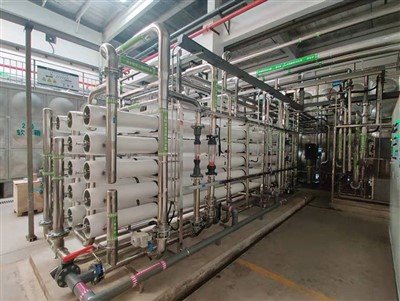
If you’re tired of dealing with water quality issues that mess up your experiments, products, or processes, and you want a system that’s built to stay stable, no cutting corners, feel free to reach out to discuss your needs. We can walk you through exactly what your facility requires, customize a system that fits your flow rate and purity standards, and set up a service plan to keep it running smoothly for years.
EDI Pure Water System References:
- ASTM International. (2020). Standard Practice for ultrapure water used in electronics. ASTM D5127-20.
- World Health Organization. (2017). Guidelines for drinking-water quality, 4th ed. WHO Press.
- American Water Works Association. (2019). Reverse osmosis and nanofiltration for water and wastewater treatment. AWWA Manual M53.
- International Organization for Standardization. (2018). Water quality – Specification for ultrapure water. ISO 3696:2018.
- Ultrapure Water Association. (2021). The fundamentals of ultrapure water system design and maintenance. UWA Technical Report Series.
Shenzhen Jkon Environmental Protection Technology Co., Ltd.
As one of the most professional ultra pure water system manufacturers and suppliers in China, we’re featured by quality products and good service. Please rest assured to buy customized ultra pure water system made in China here from our factory. Contact us for more details.
Address: Shanghenglang Industrial park, Daloang Street, Longhua District, Shenzhen, China
E-mail: sales@jkontech.com
WebSite: https://www.jkontech.com/
