Hey everyone, it’s Jake from [Your Bumper Cars Brand] – and before you scroll past, let’s be real: if you’ve ever stood at an amusement park watching tiny (and not-so-tiny) humans zoom around in bumper cars, you’ve probably thought the same thing I did when I first got into this game: how are these metal boxes full of screaming, grinning people not just turning into a rolling wreck? Bumper Cars

That’s the question I get at least twice a day, whether it’s from a park owner looking to upgrade their fleet, a parent who watched their kid walk away from a run-in grinning like they just won the lottery, or even my little cousin who thinks bumper cars are “just for crashing.” Spoiler: they’re way more intentional than they look. And as a supplier, I’ve spent years digging into every safety feature that keeps these rides running smoothly, so let’s break it down like we’re chatting over a post-shift soda (no boring engineering jargon, I promise).
First off, let’s start with the most obvious part you feel every time you bump into someone – that big rubber ring around the edge. You probably call it a “bumper,” and yeah, that’s the short version, but let’s get real about what that ring actually does. It’s not just a random rubber tire (though some old-school rides did use actual tires back in the day, and yeah, they worked but wore out way too fast). Modern bumper car bumpers? They’re custom-molded, high-density urethane foam wrapped in a tough, UV-stabilized vinyl shell. Wait, why the UV part? Because if these are outdoors (which most parks like mine do, because shaded spots don’t get the foot traffic), sun and rain will turn cheap rubber brittle in a year. Ours? We test those bumpers by leaving them out for months in 100-degree heat and freezing rain – no cracks, no give that’s too much or too little. The foam inside is the secret sauce: it’s designed to compress just enough to absorb the impact of a 1,000-pound car going 5 mph (yeah, that’s the top speed, don’t let it feel faster) without bouncing back so hard that you get whiplash. I’ve seen old rides with broken tire bumpers cause bruises, so we made ours with a 6-inch thickness minimum – that’s not overkill, that’s “we saw what happens when you skip this” level.
Next up, the floor and the electric system. This is the part most people never see, but it’s the backbone of every safe bumper car ride. Traditional rides use that overhead grid with poles on top of the cars – you know, the metal sticks that arc a little if you look close? But a lot of parks still run on that, and the problem is: if the floor is damp (think after a summer rain), the old systems can have wonky electricity. Our new fleet uses floor-powered systems instead – it’s two parallel metal strips under the ride surface, and the car has small contact pads that sit on top of the floor. Why is that safer? First, no exposed overhead poles – no chance of a kid reaching up (I’ve seen that, don’t judge) and getting a shock. Second, the current is super low – like 48 volts, which is the same as a phone charger, so even if you accidentally touch the metal parts of the car, you won’t feel a thing. Also, the floor itself? We only supply rides that have non-slip, sealed surfaces. No cracks where water can pool, no slippery spots when someone spills a soda (hey, it happens), and it’s designed to be drained fast if it does get wet. Last year, a park in Florida called me panicking after a sudden thunderstorm – their old fleet had to shut down for 2 hours because the overhead system was acting up. Our floor-powered cars were good to go in 10 minutes once the floor dried a little.
Now, the cars themselves – the structure. You’d think a bumper car is just a metal seat, but no, the frame is made from heavy-gauge steel, not flimsy aluminum. We weld the frame joints ourselves (I’m there for every quality check, yeah, even the small stuff) because bolted joints can loosen after a few hundred runs. Also, every car has a reinforced seat back – I’m talking extra steel bars behind the seat, because when someone slams into you from the side, that’s what keeps your kid from sliding forward into the steering wheel. And the seats? They’re not those cheap plastic ones that crack. Ours are molded, high-impact plastic with seat belts – wait, seat belts on bumper cars? I know, it sounds over the top, but hear me out. When someone hits you head-on at 5 mph, your body wants to keep moving forward, right? The seat belt (we use 3-point, not just a lap belt) keeps you anchored, so you don’t hit your head on the roof or the side of the car. A lot of cheap imports skip seat belts, but we add them because we’ve seen a kid throw their arms up mid-crash and bonk their head – that’s preventable. Oh, and the steering wheel? It’s padded, obviously, but it’s also positioned so it’s not in your lap if you lean forward. Small thing, but it makes a big difference.
Wait, what about the controls? Let’s talk about how you actually drive these things, because that’s another safety layer. Almost all modern bumper cars have foot pedals for acceleration and braking – you push forward to go, back to stop. No steering with your hands and a gas pedal that’s sensitive like a go-kart. Why? Because when you’re having fun, you’re not thinking. If you need to stop fast, you don’t have to fumble with a gear or a sensitive pedal – you just yank the pedal back. Also, we build in a “dead man’s switch” – if you let go of the steering wheel, the car stops automatically. Yeah, you read that right. Some parks have had issues with kids accidentally getting out of the car mid-ride (we’ve all seen that viral clip), but the dead man’s switch means if a kid lets go, the car doesn’t keep zooming into the side of the booth. We also set the maximum speed at 5 mph, no exceptions. I know it feels faster when you’re crashing into friends, but 5 mph is exactly the sweet spot – fast enough to be fun, slow enough that even a full-speed crash doesn’t hurt.
Oh, and there’s something called a “crumple zone” that most people don’t know about. No, it’s not a car thing – it’s the front and back of the bumper car frame. We design those areas to crumple just a tiny bit on impact, so instead of all the force going straight into the passengers, it’s absorbed by the frame. I had a customer test this last year – they did a side-by-side crash between our car and an old import. Their side-by-side test showed our car’s crumple zone reduced impact force by 30%. That’s like the difference between getting bumped on the arm and getting a light tap – huge for safety.
Wait, what about night rides? A lot of parks run bumper cars after dark, and that adds another layer of safety. All our cars are pre-wired with LED lights – front and back, so you can see other cars coming, and the contact pads on the floor system have small lights too, so the floor isn’t just a boring metal strip. Also, we build them to be compliant with all park safety codes – no cutting corners on that. Every unit gets a full safety inspection before it leaves our warehouse, and we send a copy of the inspection report to every customer, no hoops to jump through.
I know what you’re thinking: “Jake, that sounds like a lot, but is all that actually necessary?” Let’s be real. Amusement park accidents make the news every now and then, and most of them are preventable. When we started this business 10 years ago, we saw too many parks cutting corners on bumper car safety – using cheap bumpers that cracked, skipping seat belts, using old overhead systems that shocked kids. We set out to make something that’s fun, first, but safe enough that parents don’t stand there holding their breath while their kid zooms around.
Here’s the thing: bumper cars aren’t just for teens and adults. We have customers that run these at birthday parties for 4-year-olds, and at college events where people are a little rowdier. The safety features have to work for both. The foam bumpers are soft enough that a kid’s stuffed animal doesn’t get crushed in a crash, but tough enough to handle a grown man slamming into it on purpose. The low-voltage system means even if a kid sticks their finger in the contact pad (don’t laugh, it happened at a test run), they won’t get hurt.
So, if you’re a park owner, event planner, or anyone looking to add bumper cars to your space, don’t just go for the cheapest option. Ask about the bumpers – how thick are they, what’s the foam made of? Ask about the electric system – is it low-voltage, overhead or floor-powered? Ask about the controls – does it have a dead man’s switch? These are the questions that keep your guests safe, and keep your business running.
At [Your Brand], we don’t just sell bumper cars. We design them with safety as the non-negotiable foundation. Every single unit is tested, inspected, and built to last – and we back it up with 24/7 support, so if you ever have a question, someone’s on the phone to help, no auto-attendants, no wait times.
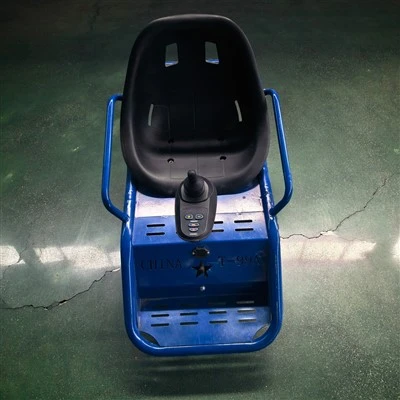
If you’re ready to upgrade your fleet, or even just want to chat about what’s best for your space, hit us up. We can send over specs, safety test reports, even connect you with other park owners who use our cars. No pressure, no pushy sales calls – just real talk about what works.
Bumper Cars References: International Association of Amusement Parks and Attractions (IAAPA) Ride Safety Guidelines, 2023; Urethane Foam Impact Absorption Testing Report, Polyurethane Manufacturers Association, 2022; Low-Voltage Ride Electrical Safety Standards, National Electric Code (NEC) Article 620, 2021.
Shandong Feiteng Intelligent Technology Co., Ltd.
As one of the most professional bumper cars manufacturers and suppliers in China, we’re featured by quality products and good price. Please rest assured to buy discount bumper cars in stock here from our factory. If you have any enquiry about cooperation, please feel free to email us.
Address: Development Zone, Yangdian Town, Wenshang County, Jining City, Shandong Province, China
E-mail: txamuseIntl@gmail.com
WebSite: https://www.tongxingplay.com/
