Hey guys, let’s talk about something that’s caused so much stress for my customers lately—leaking clutch slave cylinders. As someone who’s been supplying clutch parts for over 10 years now, I’ve seen every angle of this issue: confused DIYers trying to patch things up in their garages, mechanics panicking when a car comes in with a seeping slave, and even people who think they can just drive through it and hope for the best. Today, I’m breaking down the big question: can a leaking clutch slave cylinder actually be fixed, or is it time to bite the bullet and replace it? Clutch Slave Cylinder
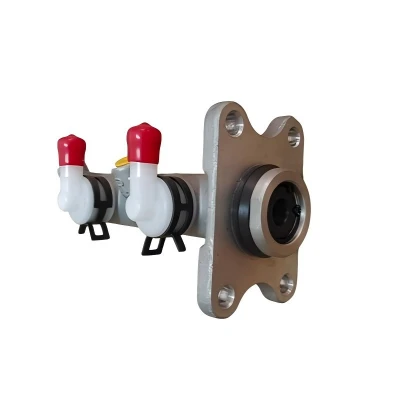
First, let’s get on the same page about what a clutch slave cylinder even does, because if you don’t know the basics, you can’t tell if a fix is worth it. Your car’s manual transmission relies on hydraulics to disengage the clutch when you press the pedal. The master cylinder pushes fluid through the lines, and that fluid hits the slave cylinder— which uses pressure to push the clutch fork, pulling the pressure plate away from the clutch disc so you can shift gears. Simple, right? The slave is usually mounted right on the transmission bellhousing, often where it’s exposed to grime, heat, and road gunk—perfect conditions for wear.
Now, the leak. Why do these things start leaking in the first place? Let’s list the common culprits:
- Worn seals: The slave has small rubber seals (cup seals) inside that hold the hydraulic fluid. Over time, heat from the transmission, old fluid breaking down, or just normal wear makes these seals hard, crack, or lose their grip. That’s the most common leak I see.
- Cylinder body damage: If some road debris hits the slave, or if someone was rough when working on the transmission, the metal cylinder can get a tiny scratch or nick. Even a small imperfection can cause fluid to seep out around the piston.
- Loose connections: Wait, not all leaks are from the cylinder itself! Sometimes the line fitting at the slave is loose, or the bleeder valve (the one you use to bleed air from the system) is a bit loose or has a bad seal. I’ve had customers swear their slave is leaking, and it was just a loose bolt holding the line on—saved them a ton of money.
- Fluid overheating: If your clutch is slipping a lot (like you’re towing heavy stuff and riding the clutch), the fluid gets way too hot. That can break down the seals faster, leading to leaks.
So, back to the main question: can you fix it? The short answer is… not always. It depends on why it’s leaking, how bad the damage is, and whether a fix will actually hold up long-term. Let’s break down the scenarios where a fix works, and where it’s just not worth it.
First, the fixable cases. These are the ones I tell my customers to try first, if they’re handy with basic car work.
If the leak is just from a loose connection or a bad bleeder valve seal: easy peasy. Tighten the line fitting (don’t overdo it—you can crack the aluminum slave body if you’re too rough) or replace the tiny bleeder valve cap or seal. I actually stock these small parts too, because so many people don’t realize that’s a cheap fix. I had a guy last month who thought his slave was toast, turns out the bleeder valve was just cross-threaded a little—$5 fix, no need for a whole new cylinder.
If the leak is from worn internal seals: this is where a seal kit comes in. A lot of slave cylinders (especially aftermarket and many original equipment ones) have a rebuild kit available. The kit will have new cup seals, sometimes a new piston, and O-rings. The process is straightforward if you have a small vise, some rags, and clean fluid. You take the old slave apart, clean the inside really well (no dirt left, that can mess up the new seals), press the new seals in, lube them a little with brake fluid (never use grease—grease eats rubber seals), put it back together, and then bleed the hydraulic system. But here’s the catch: this only works if the cylinder body isn’t damaged. If there’s a scratch or nick on the inside where the piston moves, the new seal will leak right over that blemish, and the fix will fail in a few weeks.
Now, the cases where a fix is not worth it—even if you can technically do it.
If the slave has a cracked body: metal cylinders can’t be welded or patched easily. Welding would warp the metal, and even a small crack will get worse once pressure from the hydraulic system hits it. I’ve seen guys try JB Weld on a leaky slave—they saved $50 upfront, but 2 weeks later, the crack got bigger, fluid sprayed all over the bellhousing, and they ended up needing a tow and a whole new slave anyway. Total waste of time and money.
If the piston is scored or damaged: same as the cylinder body. A scratch or groove on the piston means the new seal can’t make a tight fit, so fluid leaks. You could replace the piston, but that’s almost as much as a whole new slave cylinder—might as well just get a new one.
Also, let’s talk about hidden issues that come with a leaking slave. If you ignore the leak, the fluid level in the master cylinder drops. Low fluid means air gets into the hydraulic lines, which makes your clutch pedal feel spongy, and eventually, you won’t have enough pressure to disengage the clutch at all. That’s when you’re stuck on the side of the road, needing a tow. Also, hydraulic fluid (DOT 3, DOT 4, or DOT 5.1, depending on your car) is corrosive. If it’s leaking on the transmission seals or the clutch disc, that can cause even more expensive damage down the line. So even if you think you can patch it, don’t wait too long.
Wait, another thing: are all slave cylinders the same? No way. There’s concentric slave cylinders (also called internal slave cylinders) that are mounted inside the bellhousing, right on the release bearing. Those are super common in newer cars, and fixing one is way harder. You have to drop the transmission to get to it, and most of the time, concentric slaves don’t even come with rebuild kits—you have to replace the whole thing. That’s why I always tell people to check what type of slave they have before they even start thinking about a fix. If it’s a concentric one, skip the rebuild and go straight to a replacement. It’s not worth the labor to rebuild it, when a new aftermarket one is pretty affordable, and it comes with a warranty.
Let me share a quick story from last year to make this real. I had a guy named Mike who owned a 2012 Ford F-150 with a manual transmission. He noticed a tiny fluid spot under his truck after driving to work, and thought it was just a oil leak. When he checked the master cylinder, the fluid was almost empty. He came to me, and I asked him to show me where the leak was. It was his external slave cylinder—small leak around the bleeder valve. Tightened the bleeder, topped off the fluid, and he was good to go. A week later, he came back and bought a couple of extra bleeders, because his neighbor had the same issue. That’s the kind of fix that works, fast, and saves everyone hassle.
Now, what about if you’re not a DIY person? Should you attempt to fix a leaking slave cylinder? Let’s be real here. If you’ve never worked on a car before, dropping a transmission (for concentric slaves) or taking apart a slave cylinder to rebuild it is not a good idea. You could damage lines, get air in the system, or even break the slave body. For most people, especially if your slave is a concentric one, the safest bet is to take it to a mechanic. But even then, make sure the mechanic is not just trying to sell you a new slave without checking if the leak is from a loose connection. A lot of mechanics will go for the quick replacement, but I’d rather see them troubleshoot first.
Let’s wrap this up with some clear takeaways:
- If the leak is from a loose fitting, bad bleeder seal, or minor external damage: fix is easy, cheap, and totally worth it.
- If the leak is from worn internal seals and the cylinder body/piston is undamaged: a rebuild kit can work, but make sure you do the job right (clean, lube with brake fluid, bleed properly).
- If the slave has a cracked body, scored piston, or it’s a concentric slave in a newer car: replacement is the way to go. It’s more reliable, and you won’t waste time on a fix that fails fast.
- Never ignore a leak—even a tiny one. It can turn into a big, expensive problem in no time.

Now, if you’re dealing with a leaking clutch slave cylinder and you’re not sure if it’s fixable, or you need parts (rebuild kits, new slaves, bleeder valves), reach out to our team. We’ve got years of experience helping people figure out the right fix or replacement for their specific make and model. Don’t wait until your clutch goes out on you—get in touch today to chat through your issue and grab the parts you need.
Clutch Slave Cylinder References
- Automotive Maintenance and Light Repair (AMLR) Manual, ASE Education Foundation, 2022
- Clutch Hydraulic System Troubleshooting Guide, National Institute for Automotive Service Excellence (ASE), 2021
- Aftermarket Clutch Component Durability Study, Automotive Parts Association, 2023
Ruian Xinyao Automobile Parts Co., Ltd.
With abundant experience, we are one of the most professional clutch slave cylinder manufacturers and suppliers in China. We warmly welcome you to wholesale bulk advanced clutch slave cylinder from our factory. If you have any enquiry about cooperation, please feel free to email us.
Address: Xialin Industrial Zone, Tangxia Town, Ruian City,Wenzhou City,Zhejiang Province,China
E-mail: 18969725686@163.com
WebSite: https://www.raxinyao.com/
